
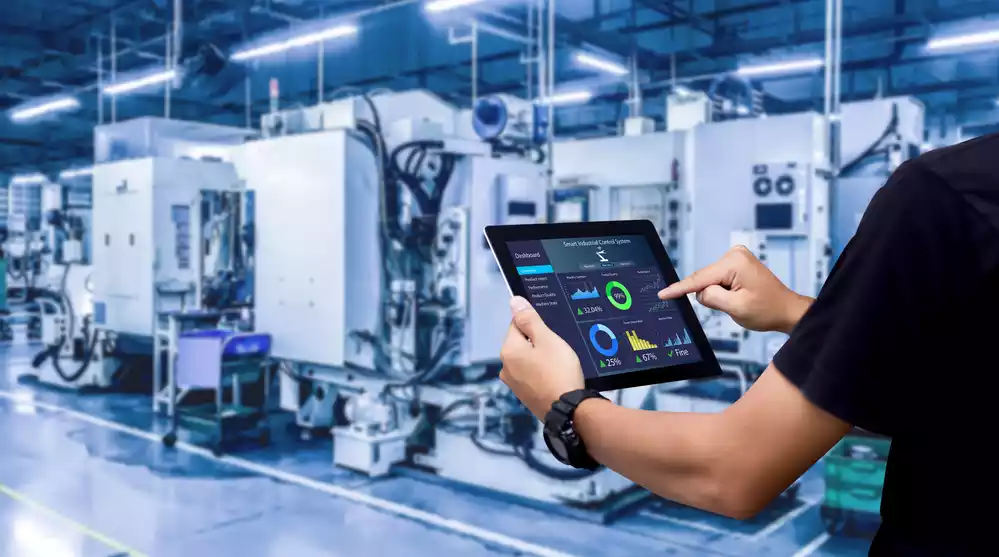
The global industrial landscape is undergoing a profound structural evolution. Modern manufacturing facilities, logistics hubs, and processing plants are increasingly shifting away from manual, labor-intensive workflows toward integrated automated ecosystems. Industrial automation leverages advanced robotics, computerized control systems, internet of things connectivity, and machine learning software to execute operational tasks with minimal human intervention.
While early industrial adoption focused primarily on simple mechanical tasks, modern automation spans complex end-to-end operational processes. Investing in industrial automation is no longer merely a cost-cutting tactic; it serves as a core strategy for companies seeking to maximize operational throughput, eliminate quality defects, enhance workplace safety, and maintain a competitive advantage in a volatile global market.
Accelerating Production Throughput and Efficiency
One of the most immediate operational advantages of industrial automation is the dramatic acceleration of production cycles. Human workers are subject to physical limitations, fatigue, shift changes, and ergonomic constraints. Automated systems, by contrast, operate continuously at uniform speeds without sacrificing precision.
Continuous Uninterrupted Operations
Automated production lines enable round-the-clock manufacturing operations, commonly referred to as lights-out manufacturing. Advanced robotics and automated conveyor networks can execute assembly, material handling, packaging, and sorting tasks continuously across multiple shifts.
By eliminating downtime associated with manual shift handoffs, rest breaks, and fatigue-induced slowdowns, industrial plants achieve significantly higher output volumes within the same physical footprint.
Reducing Cycle Times and Processing Bottlenecks
Automation removes human variability from repetitive manufacturing cycles. Automated pick-and-place robots, high-speed stamping presses, and computerized numerical control machinery execute physical tasks with extreme velocity and mathematical consistency.
Systematic integration of these technologies minimizes idle time between operational stages, streamlines material movement across the plant floor, and eliminates inventory bottlenecks that typically delay product assembly.
Elevating Quality Assurance and Product Precision
In high-volume manufacturing, human error is an inevitable statistical reality. Manual assembly, visual quality inspections, and repetitive material handling are inherently prone to inconsistency, misalignments, and overlooked defects. Industrial automation transforms quality control from a reactive sampling process into a continuous, real-time standard.
Eliminating Human Error in Assembly
Robotic assembly systems operate with sub-millimeter repeatable precision. Computer-controlled machinery applies precise torque to fasteners, dispenses adhesives with exact volumetric accuracy, and positions complex components without deviation.
This level of mechanical consistency virtually eliminates assembly errors, reduces scrapped raw materials, and minimizes the need for costly manual rework during final quality audits.
Real-Time Automated Quality Inspection
Traditional quality assurance relied on manual inspection of random product samples after assembly was complete. Automated visual inspection systems, powered by high-resolution digital cameras and machine vision software, inspect every single item passing along the production line in real time.
These vision systems instantly identify surface imperfections, dimensional inaccuracies, missing components, or labeling errors at line speed. Defective items are automatically diverted from the production stream immediately, preventing widespread batch contamination and reducing warranty claims.
Enhancing Workplace Safety and Labor Utilization
Industrial environments often involve hazardous working conditions, including heavy material lifting, exposure to extreme temperatures, toxic chemical handling, high-voltage equipment, and noise pollution. Automating high-risk operational tasks protects human workers from physical harm while optimizing workforce allocation.
Removing Workers from Hazardous Environments
Deploying industrial robots to handle dangerous physical operations significantly reduces workplace injuries and occupational health risks:
-
Automated guided vehicles move multi-ton material loads across facilities, reducing forklift collisions and heavy lifting injuries.
-
Robotic arms handle high-temperature metal casting, welding, and laser cutting without exposing human operators to thermal radiation or toxic fumes.
-
Enclosed automated spray booths apply industrial paints and coatings, insulating workers from volatile organic chemical exposure.
Reducing workplace incidents minimizes costly worker compensation claims, lowers insurance premiums, and reduces unplanned downtime caused by accident investigations.
Shifting Human Talent Toward High-Value Roles
A common misconception is that industrial automation simply replaces human labor. In practice, modern industrial automation shifts human capital away from dangerous, repetitive manual labor toward strategic, high-value technical roles.
Operators transition into systems managers, maintenance specialists, quality assurance analysts, and process optimization engineers. This workforce elevation improves job satisfaction, reduces voluntary turnover, and fosters a culture of technical innovation on the factory floor.
Optimizing Asset Management Through Predictive Maintenance
Unplanned equipment downtime is one of the most expensive threats to industrial productivity. When a critical machine breaks down unexpectedly, entire assembly lines grind to a halt, cascading delays down the supply chain and costing companies thousands of dollars per hour. Industrial automation leverages sensor technology to replace reactive maintenance with proactive asset health management.
Sensor Integration and Data Collection
Modern automated machinery is embedded with industrial internet of things sensors that continuously measure key operational variables:
-
Vibration sensors monitor gearboxes and motor bearings to detect mechanical wear long before physical failure.
-
Thermal imaging sensors track operating temperatures across electrical enclosures and mechanical drives to spot overheating.
-
Acoustic sensors detect subtle sound frequency changes that signal pressure leaks or misaligned components.
This continuous stream of operational telemetry provides complete real-time visibility into machine health across the entire production facility.
Transitioning from Reactive to Predictive Maintenance
Traditional maintenance schedules operated on fixed time intervals or reacted after a component failed. Automated predictive maintenance software analyzes incoming sensor data against historical failure patterns to predict exactly when a component will require service.
Maintenance teams can schedule repairs during planned shift transitions or low-volume periods, preventing catastrophic equipment failure, extending asset lifespans, and preserving overall plant throughput.
Maximizing Supply Chain Agility and Inventory Management
Industrial productivity depends heavily on raw material availability and efficient warehousing. An automated factory floor requires equal sophistication across logistics, material tracking, and inventory distribution to prevent supply bottlenecks.
Automated Storage and Retrieval Systems
High-density automated storage and retrieval systems utilize computer-controlled cranes and shuttles to load, retrieve, and transfer inventory within warehouses with extreme speed and spatial efficiency.
These automated systems track raw materials and finished goods in real time, maximizing vertical storage capacity, eliminating inventory search time, and ensuring that assembly lines receive required parts precisely when needed.
Data Integration Across the Enterprise
Integrating shop-floor automation with enterprise resource planning systems creates complete operational transparency. When an automated assembly line processes a batch of goods, inventory levels automatically update across internal management systems.
This seamless digital tracking improves demand forecasting, optimizes raw material purchasing cycles, and minimizes excess warehouse inventory holding costs.
Frequently Asked Questions
What is the typical timeframe required to see a return on investment from industrial automation?
The return on investment timeframe for industrial automation typically ranges between twelve and thirty-six months, depending on the scale of implementation, existing infrastructure complexity, equipment utilization rates, labor cost reductions, and quality improvements achieved.
How does industrial automation adapt to customized or low-volume product manufacturing?
Modern industrial automation utilizes flexible robotic programming, modular tooling, and advanced software configurations. This allows automated production lines to switch between different product variants, custom dimensions, or low-volume batches with minimal changeover downtime compared to legacy fixed systems.
What initial steps should a manufacturer take before implementing automation?
Before implementing automation, a manufacturer should perform a comprehensive workflow audit to identify operational bottlenecks, calculate baseline process costs, evaluate quality defect trends, standardize existing manual procedures, and establish clear performance targets for automated systems.
Does industrial automation increase overall energy consumption in manufacturing facilities?
While automated equipment consumes electrical power, industrial automation often reduces total energy consumption per manufactured unit. Automated machines operate with higher speed and efficiency, optimize thermal cycles, eliminate unnecessary machine idling, and allow facilities to operate with reduced lighting and climate control requirements.
How do automated control systems handle cybersecurity threats on the factory floor?
Industrial control systems mitigate cybersecurity risks by enforcing network segmentation between operational technology and corporate networks, implementing strict access control protocols, utilizing encrypted data transmission, and conducting regular security audits and firmware updates.
What is the role of collaborative robots in industrial automation environments?
Collaborative robots, or cobots, are designed with built-in force sensors and safety features that allow them to work directly alongside human operators without protective physical cages. They assist human workers with repetitive assembly tasks, light material handling, and quality inspection, blending human adaptability with robotic precision.
How does industrial automation contribute to environmental sustainability goals?
Industrial automation advances sustainability goals by minimizing raw material waste through precise manufacturing, lowering scrap rates, optimizing energy utilization across equipment cycles, reducing chemical emissions, and extending the operational lifespan of industrial capital assets.