
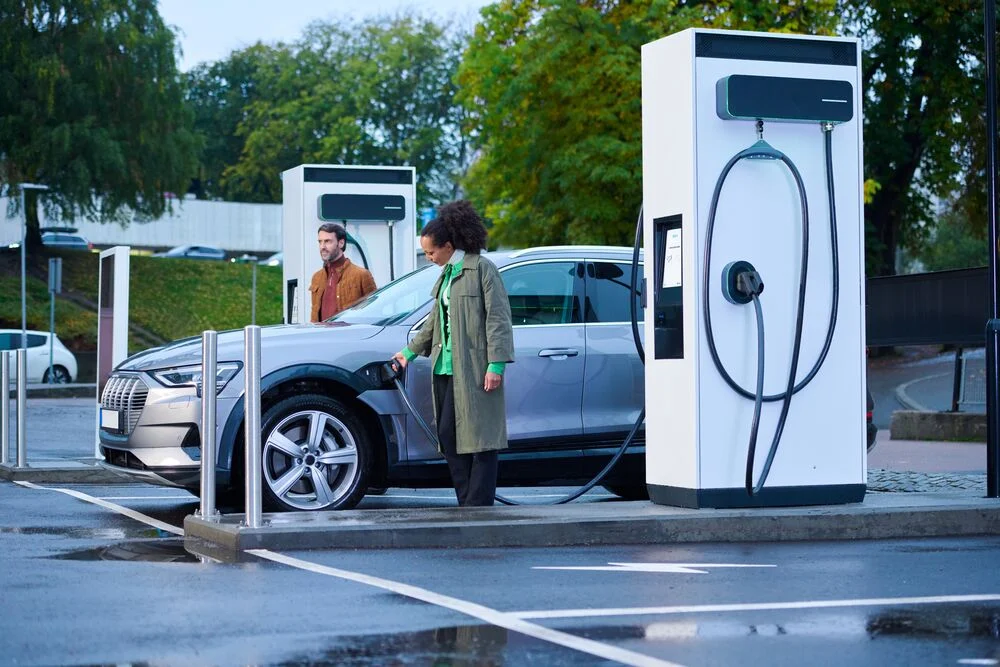
The rise of electric vehicles (EVs) across Thailand is transforming how people think about personal transportation. From the busy streets of Bangkok to the quiet roads of Chiang Mai, drivers are choosing cleaner, quieter cars. This shift brings a growing demand for rapid and convenient charging solutions. While home charging works well for daily commutes, longer trips require a different approach. This is where Direct Current (DC) fast charging becomes essential.
As the number of EVs increases, so does the need for an efficient charging network. A reliable EV fast charge system allows drivers to add significant range to their vehicles in a short amount of time, often in less than an hour. This convenience is vital for encouraging wider EV adoption in Thailand, making electric travel a practical option for everyone, not just city dwellers. Developing a robust public charging infrastructure is a priority for supporting this green transition.
The future of DC fast charging is not just about speed; it’s also about intelligence and efficiency. Modern systems are being designed to work better with the electrical grid. Smart charging technology can manage power demand, drawing electricity during off-peak hours to reduce strain and lower costs. For a country like Thailand, with its ambitious renewable energy goals, these smart systems will help integrate EVs into the national energy plan smoothly.
Looking ahead, we can expect charging stations to become more powerful and widely available. Stations with outputs of 150kW, 350kW, and even higher are becoming the new standard. This means a vehicle’s battery could be replenished in the time it takes to stop for a coffee. In Thailand, this development could revolutionise long-distance travel, making a drive from Bangkok to Phuket in an EV a simple and stress-free experience. The expansion of these high-power stations along major highways will be a game changer.
Another important aspect is improving the user experience. Future charging stations will be more intuitive, with simple payment systems and real-time information on availability. Mobile apps will allow drivers to locate chargers, book a spot, and monitor their charging session remotely. This focus on convenience will make public charging as easy as filling up a conventional car.
In Thailand, the progress in DC fast charging technology aligns with the nation’s 30@30 policy, which aims for 30% of all vehicles produced to be zero-emission by 2030. Achieving this goal depends on building a dependable and efficient charging network. By embracing advancements in fast charging, Thailand can accelerate its transition to sustainable transport, reduce air pollution, and create a cleaner future for generations to come. The path forward is electric, and powerful charging infrastructure is lighting the way.