
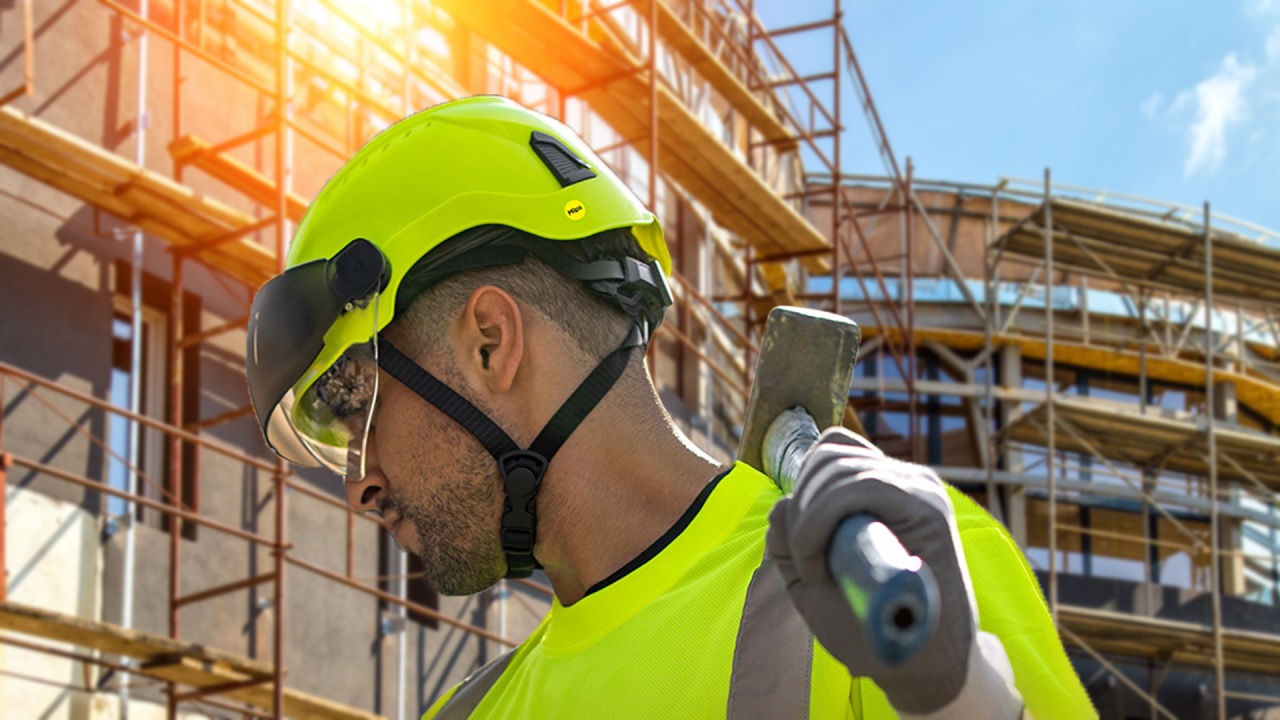
The hard hats most of your workers don and utilize while on construction sites are Type 1 helmets, and for most operations, that’s absolutely fine. However, when someone mentions Type 2 helmets, people get confused and wonder if they’ve been using the wrong head gear all along. Have they? Probably not. But it’s important to recognize the differences, for there’s more than most safety professionals realize.
Defining the Levels of Protection
Here’s what differentiates these classifications. Type 1 helmets protect vertical impacts, meaning anything falling straight down from above as it has been vetted to impact blows to the crown portion of the helmet, which makes sense as most safety concerns will be above workers’ heads.
Essentially, when items drop or fall from above, or come level with one’s head, Type 1 hard hats protect: screwdrivers that fall out of pockets, debris blowing off of a 3rd floor window, or extremely low ceilings causing beams to graze workers’ heads.
Type 2 helmets provide the same protection but also protect lateral impacts (hits from the side). Type 2 helmets must undergo testing for impact blows to the front, back and both sides of the helmet shell. This isn’t an ancillary improvement. It’s a completely separate protection classification based on safety exposure to workers operating in dangerous environments with safety requirements from multiple directions.
The Standard Testing Requirements for Each
ANSI (American National Standards Institute) outlines the standards for both types and this also helps to explain why Type 2 helmets cost more. For example, for Type 1 certification, a manufacturer needs to perform impact testing for the crown of the hard hat. They drop a weight from a specific height or distance and measure the tested force when it transpires through the helmet. If it’s within impact threshold limits, it’s certified.
For Type 2 certification, a manufacturer needs to test several points around the helmet. Each position on top (crown), front back and both sides must meet or exceed similar measures of impact resistance as the crown.
Furthermore, the suspension inside the helmet differs. The suspension helps absorb force from an angle like lateral impacts while Type 1 helmets usually accommodate a structure designed mainly for downwards force absorption and distance distribution to avoid complication.
Therefore, increased testing and engineering costs result in higher prices and not all companies will take the risk on this. This is why most merely settle for Type 1 unless conditions warrant otherwise.
When The Enhanced Protection Makes a Difference
Work with electric utilities brings this situation to life, potentially more than you’d expect. If a worker is operating on a light pole or high wire, hazards are above them but equipment being swung in with booms, passed to other individuals at shoulder height or inching forward creates lateral constraints. A wrench moving awkwardly off a boom swing could smash someone in the face.
Steel and iron workers experience similar outcomes with structural beams operated by a crane do not only descend but can swing. A beam on cable can turn 180 degrees and strike someone from another angle.
Similarly, any worker exposed to heavy machinery possesses moving arms, like front-end loader booms, bucket trucks or cranes that pivot excessively during operation. These have only limited vertical components that encompass hazards; once an item turns, it presents itself at face level.
Finally, demolition work warrants this concern too. Buildings will not fall straight down; they fall sideways, materials get shot out at different angles and debris bounces back and forth through air. When structures collapse, they do so in one motion but that motion can occur on each side, north-south and east-west at every level.
The Cost Factors No One Talks About
A decent Type 1 hard hat will run between $15-$40 dollars all dependent upon how fancy someone wants to get with brand selection for standard features.
Type 2 helmets run upwards of $50 with quality helmets reaching $150 or more for great suspensions. For small crews, this adds up quickly.
However, this where companies get caught up. They project the increase in costs over time compared to a purchase of Type 2 and then see it’s not worth it; yet the costs incurred from Type 2 injury complications are far more expensive.
One workers’ comp claim can surpass thousands, sometimes tens-of-thousands, of dollars of medical bills from incurred time lost to injuries sustained while on certain jobs not covered by Type 1 protections.
Lateral impact risks occur when a company fails to assign appropriate helmets based on projected features where employees would be subject to such concerns. Therefore, the perception should be of actual risks while on job sites determined during any hazard assessment.
How Class Ratings Factor In
Helmets are also differentiated based on electrical protection classes which make this all so much more confusing.
Class G (General) represents the safe ability to work with low-voltage conductors – upwards of 2200 volts respectively. Class E (Electric) can protect workers from upwards of 20,000 volts and Class C (Conductive) offers no electrical protection, you use them if there are no electrical concerns but require impact protection instead.
Thus Type 2 Class E helmets offer extended protection laterally, and vertically, and against higher-voltage threats. That’s overkill for electrical utility use but a minimum acceptable standard for those ventures.
Type 2 Are Generally Less Comfortable
Type 2 helmets tend to be bulkier than Type 1 models; not just because of cost protections but because they must provide reinforced suspensions which adds weight, especially when someone wears it for eight hours straight.
Some people find them less comfortable than Type 1 models, integrating suspensions with other PPE gear becomes awkward and fitting becomes complicated.
The suspension – the part inside that absorbs impact, requires more adjustment points on Type 2 than would be necessary on the Type 1 version of a similar model. While this is beneficial, for safety, it’s onerous, for convenience.
Establishing the proper fit takes longer; if an individual doesn’t intend upon getting fit correctly, they won’t render impact performance all that effective if this helmet isn’t worn correctly for impact at all if it was adjusted incorrectly.
Ventilation could also be worse, the added material and different shell design mean less air flow, even in summer conditions, which became hotter for the unfortunate individual wearing the helmet all day long.
For those working in southern climates or those who have physically demanding work – that’s not fair enough to endure that complication, but sometimes should be taken into consideration as well.
How To Make the Decision for Your Employees
The first way to determine is by assessing actual hazard risks within safety best practices across work sites.
Take time to walk your job sites as needed, and observe where impacts could come from. Most things threatening crew members will be overhead; falling tools and materials low ceilings will benefit from hard hats in addition to whatever is most exposed.
Use cranes that move loads horizontally; swinging operations and other movements present at head-level become questionable, and eventually require another hat. If OSHA regulations specifically engage certain performances, it becomes evident that regardless of financial challenges, Type 2 become necessary.
Utility work, certain demolition projects and jobs near specified heavy equipment often fall into these categories. Don’t forget replacement schedules; they need to be replaced over time regardless if they’re Type 1 or Type 2 models.
Helmets won’t last forever; UV exposure, impacts (even minor) and general wear break down materials over time. Most manufacturers recommend replacement every two years regardless if they fall within Type 1 or Type 2 parameters.
The Final Word About Selected Helmet Types
Ultimately, when comparing the differences between both classifications, it’s that Type 1 protects only vertically, Type 2 protects vertically and sideways, laterally, horizontally, obliquely, and anywhere else one could get hit by dropped items.
For most construction work, Type 1 helmets suffice; adequate and cost effective features uphold what’s necessary for many elements, for ongoing safety concerns.
However, jobs where multilateral hazards exist, not having Type 2 protections in place is hardly acceptable; at minimum it’s all one should do to support those workers who would otherwise be at risk without them.
Companies that use Type 1 helmets in situations warranted for Type 2 protections gamble employee safety, and their liability, it’s not worth it over time.
While saving money may seem like an option, but does it seem worth it compared to a serious head injury?
Buying the right equipment based on what makes sense compared to specific hazards includes saving money but spending appropriately, not unnecessarily high, but just enough – relevant to the projected risks present.